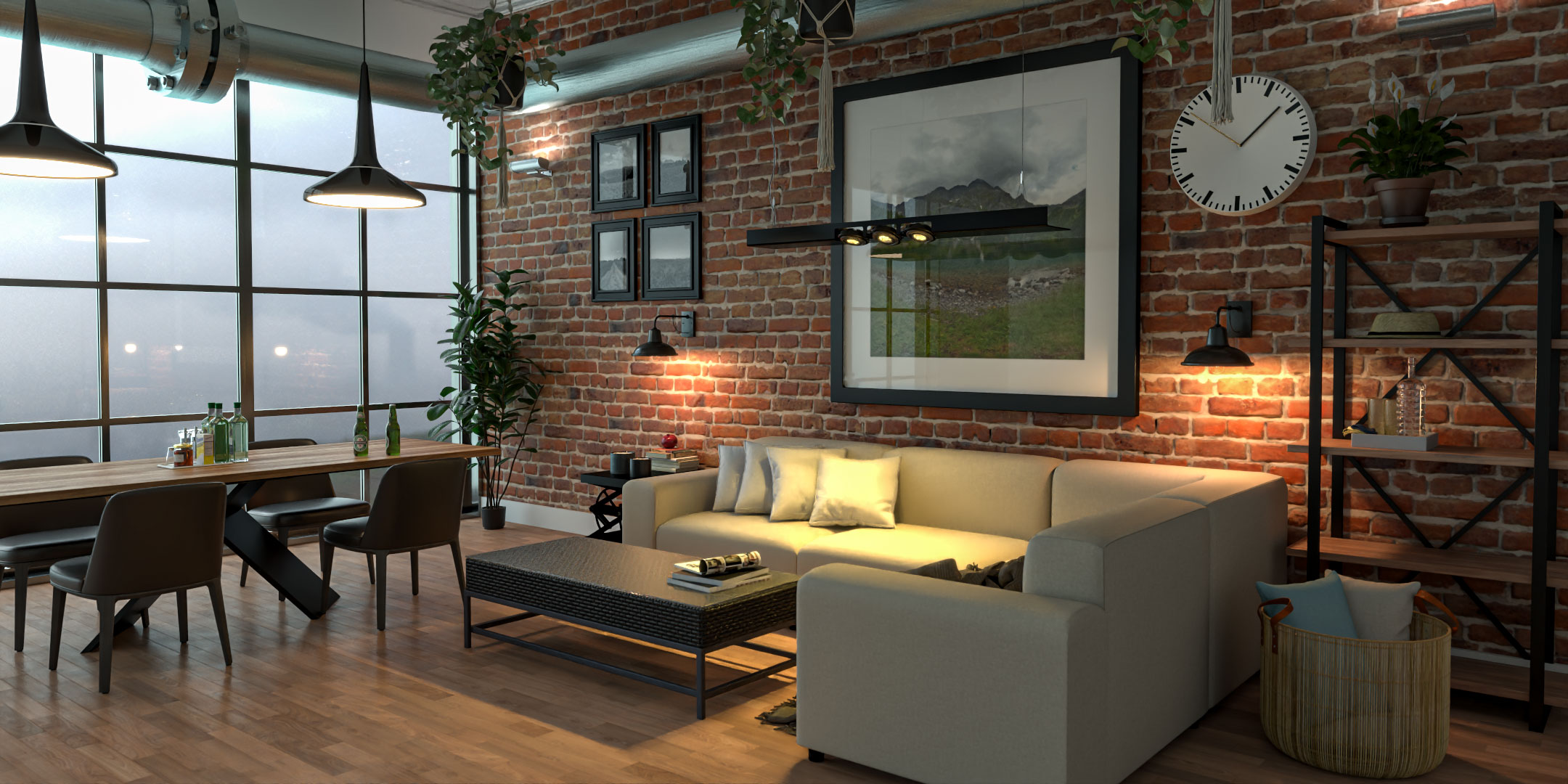
Understanding the Cost of Professional 3D Rendering
Professional 3D rendering has become an important tool for architects, property developers, interior designers, planning consultants, and property marketing teams across the UK.
However, one of the first questions businesses ask is simple: how much does professional 3D rendering cost?
There is no single price because every project is different.
The cost can depend on the complexity of the architecture, the amount of 3D modelling required, the level of detail, the number of views, interior or exterior requirements, landscaping, revisions, and the intended use of the final imagery.
More importantly, the cost should be considered alongside the potential return that professional visualisation can generate.
What Is Professional 3D Rendering?
3D rendering is the process of producing a realistic image from a digital 3D model.
For architecture and property, this can include:
Exterior architectural renders
Interior visualisation
Planning CGI
Aerial development views
Product and material visualisation
360-degree renders
3D walkthroughs
Virtual reality experiences
Professional rendering combines accurate modelling, realistic materials, lighting, camera composition, and post-production to create a convincing representation of the proposed environment.
How Much Does 3D Rendering Cost in the UK?
Professional rendering prices vary significantly depending on the scope of the project.
A relatively straightforward architectural render may cost considerably less than a complex luxury interior, large development, or full marketing package.
Factors affecting the cost can include:
Project Complexity
A simple house may require considerably less modelling than a large residential development.
Complex architecture, multiple buildings, detailed landscaping, and bespoke interiors all increase production requirements.
Modelling Requirements
If an accurate 3D model already exists, the visualisation process may be more straightforward.
If the studio needs to build the project from 2D plans, elevations, and reference material, additional modelling time may be required.
Number of Images
A project requiring one exterior view will generally have a different cost from one requiring ten interior and exterior views.
However, multiple images of the same project can sometimes be produced more efficiently because the underlying model and materials have already been created.
Level of Detail
High-end visualisation often requires detailed materials, furniture, landscaping, vegetation, lighting, architectural features, and surrounding context.
The greater the level of detail required, the greater the production time.
Revisions
The number and complexity of revisions can also affect the final cost.
A clearly defined brief can help reduce unnecessary revisions and keep production efficient.
Why Cheap Rendering Can Become Expensive
The lowest quotation is not necessarily the best value.
A low-cost render may involve compromises in modelling accuracy, materials, lighting, landscaping, image composition, or revision support.
If the final image does not communicate the project correctly, additional work may be required.
For property developers and architects, this can result in:
Delayed presentations
Additional revisions
Re-rendering costs
Weaker marketing material
Poorer client communication
The objective should therefore be to find the appropriate balance between cost, quality, accuracy, and purpose.
Calculating the Potential ROI of 3D Rendering
Return on investment depends on what the visualisation is being used to achieve.
For a property developer, for example, professional CGI could contribute to the marketing of a development worth millions of pounds.
For an interior designer, a small collection of high-quality renders could help win a significant new project.
For an architect, visualisation could strengthen a presentation or help a client understand a design proposal.
The value therefore cannot always be measured by the cost of producing the image alone.
ROI Through Off-Plan Property Sales
One of the clearest applications of professional CGI is off-plan property marketing.
When a development has not yet been constructed, there may be no professional photography available.
3D rendering can provide the imagery required to market the future property.
Developers can use CGI to showcase:
Building exteriors
Apartments
Kitchens
Bedrooms
Bathrooms
Communal areas
Gardens
Balconies
If professional visualisation contributes to even a single additional sale or helps accelerate sales activity, its cost can become relatively small compared with the value of the development.
ROI Through Investor Presentations
Investors need to understand the opportunity behind a development.
Architectural drawings can provide technical information, but realistic CGI can make the physical vision much easier to understand.
Professional visualisation can help developers communicate:
Development quality
Architectural character
Interior standards
Site context
Intended market position
For an investment proposal, the ability to communicate the future development clearly can be valuable well beyond the production cost of the CGI.
ROI for Interior Designers
Interior designers can also generate significant value from professional rendering.
A photorealistic interior visualisation can help a designer:
Win new clients
Present concepts
Secure project approval
Demonstrate design quality
Create portfolio material
Market completed work
For a high-value interior project, professional CGI may represent a relatively small part of the overall project budget while providing significant communication and marketing value.
ROI Through Planning and Design Communication
Planning CGI has a different type of return.
Its purpose is not primarily to sell a property but to communicate the proposed development.
Accurate visualisation can help demonstrate:
Scale
Massing
Materials
Landscaping
Context
Streetscape
Visual impact
CGI cannot guarantee planning permission, but it can make a proposal easier to understand alongside architectural drawings and planning documentation.
The Value of Reusable CGI Assets
One of the major advantages of professional 3D rendering is that the underlying 3D model can potentially be reused.
Once a development has been accurately modelled, additional visual assets can often be produced more efficiently.
For example, the same project may eventually require:
Exterior renders
Interior renders
Aerial views
3D walkthroughs
360-degree imagery
VR
Marketing visuals
This means the initial investment in 3D modelling can continue generating value throughout the development lifecycle.
3D Walkthroughs and Their Potential ROI
A 3D walkthrough can provide a more immersive representation of a property or development.
Instead of viewing a single image, a potential buyer or investor can move through the proposed environment.
Walkthroughs can be particularly useful for:
Off-plan developments
Sales presentations
Investor meetings
Property websites
Sales suites
For developments where spatial experience is important, a walkthrough can communicate information that several static images may not fully convey.
Virtual Reality and Investment Value
Virtual reality takes architectural visualisation further by allowing users to experience a proposed environment from within.
VR can be used to:
Present luxury properties
Demonstrate development concepts
Engage investors
Support sales launches
Present projects to international clients
The return on VR investment depends heavily on the project and audience, but it can provide a memorable experience for developments where presentation quality is particularly important.
What Makes a 3D Render Worth the Investment?
The strongest return comes from visualisation that serves a clear purpose.
Before commissioning CGI, determine what the imagery needs to achieve.
Is the objective to:
Support planning?
Win a design client?
Attract investors?
Sell properties off-plan?
Present a luxury interior?
Explain a complex development?
Create marketing content?
The answer should influence the type and number of visualisations produced.
Quality, Accuracy and ROI
Professional rendering is not simply about making an image look realistic.
The visualisation needs to accurately communicate the underlying architecture and design.
An effective architectural render should balance:
Accuracy
Realism
Composition
Lighting
Materials
Context
Communication
A beautiful image that does not represent the actual proposal correctly may have limited commercial value.
How to Maximise Your Rendering Investment
Several steps can help maximise the return from professional CGI.
Start With a Clear Brief
Define the audience, purpose, required views, style, and deadline before production begins.
Provide Accurate Source Material
Architectural drawings, CAD files, 3D models, material references, site photographs, and specifications can help the visualisation studio work efficiently.
Choose Views Strategically
More images do not automatically mean more value.
Select camera positions that communicate the most important aspects of the project.
Think Beyond One Image
Consider whether the project could benefit from interior renders, exterior views, 3D walkthroughs, 360-degree imagery, or VR.
Plan for Multiple Uses
Where appropriate, create CGI that can be adapted for planning, investor presentations, websites, brochures, and property marketing.
Choosing a Professional Rendering Studio
When comparing rendering services, consider more than the quoted price.
Review:
Portfolio quality
Relevant project experience
Architectural accuracy
Interior and exterior capability
Planning CGI experience
3D walkthrough capability
VR services
Revision process
Turnaround times
Communication
Pricing structure
A studio that understands the commercial objective behind the visualisation can often provide considerably more value than a provider focused only on producing attractive images.
The Cost of Professional 3D Rendering vs the Cost of Not Using It
For many projects, the relevant question is not simply how much CGI costs.
It is what the project could lose if its vision is not communicated effectively.
A development that is difficult to understand may be harder to market.
An interior design concept that cannot be visualised may be harder to approve.
An investment proposal that lacks compelling visual communication may fail to communicate its full potential.
Professional visualisation can therefore be viewed as an investment in communication, rather than simply an expense.
Conclusion
The cost of professional 3D rendering depends on the project, the level of detail, the number of visualisations, and the intended use.
While a single render has a measurable production cost, its potential value can extend much further through planning communication, investor presentations, design approval, off-plan sales, property marketing, and future visual content.
The best return comes from choosing the right visualisation approach for the project and working with a studio that can combine technical accuracy with high-quality presentation.
At Luxe3D, we provide professional 3D rendering, architectural visualisation, interior visualisation, planning CGI, 3D walkthroughs, and virtual reality services for UK architects, property developers, interior designers, and property professionals. We focus on creating visual assets that are not only photorealistic, but purposeful, accurate, and suitable for the commercial or design objectives of each project.