Property development is built around a fundamental challenge: communicating the value of a building before it exists.
Whether presenting a residential development to prospective buyers, introducing a commercial scheme to investors or discussing an architectural proposal with stakeholders, property developers must help audiences understand spaces that may still be months or years away from completion.
Traditional architectural drawings and photorealistic CGI have long played an important role in this process. Floor plans communicate layouts, exterior renderings illustrate architectural character, and interior visualisations demonstrate how completed spaces might appear.
However, these formats have one important limitation. They show a property from predetermined viewpoints.
VR for property developers introduces another dimension to pre-construction visualisation by allowing prospective buyers, investors and project stakeholders to experience proposed environments more immersively.
Instead of relying entirely on static images, audiences can explore digital representations of buildings, understand spatial relationships and develop a clearer impression of the proposed development.
For property developers operating in competitive UK markets, immersive visualisation can become a useful addition to property marketing, design communication and stakeholder presentations.
This guide explores how virtual reality works in property development, its advantages over static imagery, practical applications, production requirements and how developers can decide whether immersive visualisation is appropriate for their projects.
What Is VR for Property Developers?
Virtual reality for property developers involves creating digital representations of proposed buildings and spaces that can be experienced through compatible immersive technology.
The experience typically begins with a three-dimensional architectural model developed from project drawings, design specifications and reference information.
The model is then prepared for an appropriate viewing format, which may include headset-based virtual reality, interactive real-time environments or panoramic 360-degree presentations.
Depending on the technology, users may be able to:
Explore residential interiors before construction.
Examine proposed commercial environments.
Understand room proportions and spatial arrangements.
Look around architectural spaces in 360 degrees.
Move between selected rooms or viewpoints.
Experience the relationship between interiors and external views.
Compare alternative finishes or design configurations.
Review communal areas and shared facilities.
The objective is to communicate the proposed development in a way that goes beyond individual images.
VR does not replace architectural drawings, technical documentation or conventional CGI. Instead, it provides an additional method of experiencing the design.
For a broader introduction, explore Virtual Reality: The Future of Architectural Experience.
Why Static Architectural Images Are Not Always Enough
Photorealistic architectural renderings remain among the most effective tools for property marketing.
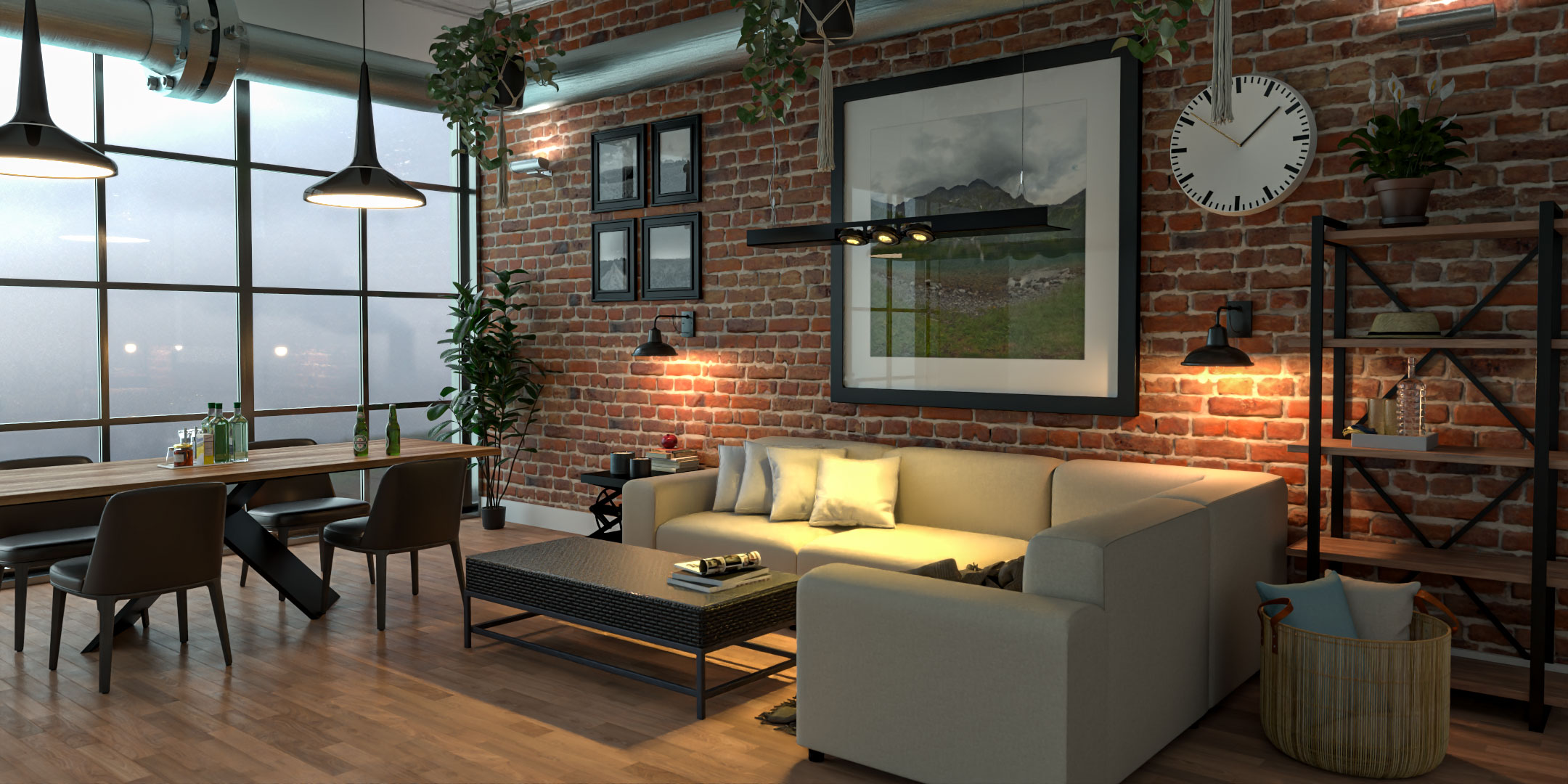
A carefully composed exterior image can communicate the appearance of a proposed development, while a high-quality interior rendering can illustrate materials, lighting, furnishings and architectural character.
Static images are also practical. They can be incorporated into websites, brochures, planning presentations, advertisements and digital marketing campaigns.
However, a single image cannot communicate every aspect of a building.
For example, an interior rendering may show an impressive open-plan living area without fully explaining the relationship between the kitchen, entrance, hallway and adjoining rooms.
Similarly, an exterior rendering may communicate the architectural appearance of an apartment development without showing how residents will experience its internal circulation or shared facilities.
This is where immersive property visualisation can add value.
By allowing viewers to examine selected spaces from multiple directions, VR can communicate spatial relationships that are difficult to understand through individual images.
Our article on Immersive Property Visualisation: Beyond Static Images explores this wider transition towards interactive visual content.
1. Helping Buyers Understand Properties Before Construction
Off-plan property marketing requires prospective buyers to evaluate homes that have not yet been completed.
Buyers may receive floor plans, specifications, brochures and architectural renderings, but these materials still require interpretation.
A floor plan can establish that a bedroom measures four metres by three metres.
However, the buyer may find it difficult to imagine how the room will feel with furniture, windows and ceiling heights taken into account.
Immersive visualisation can help communicate these relationships.
For example, a prospective buyer exploring a virtual apartment may be able to examine the living room, understand the relationship between the kitchen and dining area, and view the proposed bedroom layout.
This can help answer practical questions about the property.
It is important, however, that the digital environment accurately represents the approved or proposed design and clearly identifies any illustrative finishes.
VR can support buyer understanding, but it cannot guarantee a purchase decision.
2. Creating More Engaging Off-Plan Sales Presentations
Property marketing often relies on communicating an attractive lifestyle as well as the physical characteristics of a development.
Photorealistic CGI can establish this visual identity through carefully selected lighting, materials and composition.
VR can develop the presentation by introducing an exploratory experience.
Rather than viewing a sequence of images, prospective buyers can experience selected spaces in a more immersive format.
For example, a residential development presentation might begin with a photorealistic exterior image, followed by a 3D walkthrough and an immersive tour of a representative apartment.
Each format contributes something different.
The exterior rendering establishes the development's architectural character.
The walkthrough communicates movement and connections between spaces.
The immersive tour allows the viewer to explore the environment from selected positions.
This coordinated approach can help create a more complete understanding of the property.
Our guide to CGI for Property Developers: Accelerating Off-Plan Sales examines how architectural visualisation supports pre-construction marketing.
3. Communicating Spatial Layouts More Clearly
Spatial understanding is one of the main advantages of immersive property visualisation.
Property buyers may struggle to interpret room arrangements from conventional floor plans.
This is particularly relevant for developments featuring:
Open-plan living spaces.
Duplex apartments.
Multi-level homes.
Unusual architectural layouts.
Large entrance halls.
Communal facilities.
Complex circulation arrangements.
For example, a duplex apartment may contain a double-height living room, mezzanine level and connecting staircase.
A collection of static renderings can illustrate these features individually.
An immersive environment can provide additional context by allowing the viewer to examine how they relate within the same architectural space.
The experience can help communicate the design's intended proportions and spatial organisation.
However, the underlying model must be dimensionally accurate for the experience to be reliable.
4. Presenting Luxury Residential Developments
High-end residential developments often involve carefully coordinated architecture, interior design, materials and furnishings.
Buyers may be evaluating properties where design quality, spatial character and finishes form an important part of the purchasing decision.
Immersive visualisation can help communicate these elements together.
For example, a luxury apartment presentation may include:
A spacious entrance.
Bespoke kitchen cabinetry.
Natural stone finishes.
Designer lighting.
Floor-to-ceiling glazing.
Carefully selected furniture.
Private terraces.
Views towards the surrounding environment.
The ability to examine these elements within a coordinated digital environment can provide additional context beyond individual CGI images.
However, luxury visualisation requires particular attention to detail.
Materials, lighting, furniture and architectural proportions should be developed consistently.
Where branded furniture or decorative products are represented, appropriate reference information and any necessary permissions should be considered.
Explore Photorealistic Interior Visualisation for High-End Projects for more on presenting premium interiors.
5. Using VR to Present Commercial Developments
Virtual reality is not limited to residential property marketing.
Commercial developments can also benefit from immersive presentations, particularly when buildings involve complex layouts or multiple potential uses.
Examples include:
Office developments.
Retail environments.
Hospitality properties.
Mixed-use schemes.
Commercial refurbishments.
Leisure facilities.
Public-facing commercial spaces.
For an office development, immersive visualisation may help prospective occupiers understand reception areas, circulation, meeting rooms and representative workspaces.
For a hospitality project, it may help communicate the arrival experience, shared facilities and guest accommodation.
For a mixed-use development, selected immersive environments may demonstrate how residential, commercial and communal spaces relate to one another.
These experiences can support discussions with occupiers, investors and development partners.
Our article on Capturing Commercial Space: Mixed-Use Development CGI explores the wider role of architectural CGI in complex commercial schemes.
6. Supporting Property Investment Presentations
Investors evaluating property developments often need to understand the proposed building, its design quality and its intended market positioning.
Financial information, development appraisals, planning documentation and commercial assumptions remain essential.
However, visualisation can help communicate the physical characteristics of the investment.
VR may be useful when presenting:
Proposed residential accommodation.
Shared amenities.
Commercial reception areas.
Representative interiors.
Development layouts.
Architectural design features.
For example, an investor reviewing a proposed apartment development may use immersive visualisation to examine the quality and spatial arrangement of a representative unit.
This provides visual context for the development proposal.
It does not establish financial viability, investment performance or market demand.
Those assessments require separate evidence.
Our guide to How UK Property Developers Use 3D Visualisation to Secure Investors discusses visual communication within property investment presentations.
7. Making Property Marketing More Interactive
Conventional property marketing typically presents information in a fixed sequence.
A brochure contains selected photographs or CGI images.
A video follows a predetermined camera path.
An immersive experience can provide greater freedom to explore.
Depending on the format, viewers may be able to choose which room to examine or which viewpoint to open.
This creates opportunities for more personalised presentations.
For example, one buyer may be particularly interested in the kitchen and living area, while another may want to examine bedrooms and outdoor spaces.
An interactive presentation can allow each viewer to focus on the features most relevant to them.
However, the degree of interactivity depends on the technology used.
A linked 360-degree tour offers different functionality from a fully interactive real-time VR environment.
These distinctions should be established before commissioning the visualisation.
8. VR Headsets, 360-Degree Tours and 3D Walkthroughs
The term virtual reality is sometimes used broadly in property marketing.
However, several different technologies can support immersive or interactive presentations.
Headset-Based Virtual Reality
Headset-based VR places the viewer inside a digital environment using compatible immersive hardware.
It can provide a strong sense of spatial presence.
Depending on the system, users may be able to move or navigate within the environment.
360-Degree Property Tours
A 360-degree tour allows viewers to look around a panoramic environment.
Multiple viewpoints can be linked to create a tour through selected spaces.
These experiences can often be viewed on conventional screens, although compatibility varies.
Real-Time Interactive 3D Environments
Real-time visualisation allows a digital environment to respond dynamically to user movement or interaction.
Some systems support navigation, material changes and interactive elements.
These experiences may require additional model preparation and hardware resources.
Pre-Rendered 3D Walkthroughs
A 3D walkthrough is a rendered animation that follows a planned camera route through the property.
It can communicate circulation, spatial connections and architectural atmosphere without requiring viewers to navigate the environment themselves.
Each format has different advantages.
Luxe3D provides 3D walkthrough and floor-plan visualisation and 360-degree rendering services, with the appropriate immersive requirements assessed according to the project.
9. How VR Compares With Static CGI
VR should not be treated as a universal replacement for architectural rendering.
Static CGI remains highly effective for advertising, brochures, websites and presentation materials.
The most appropriate format depends on the intended purpose.
Consideration | Static CGI | Immersive VR |
Architectural appearance | Excellent for selected viewpoints | Allows exploration from supported viewpoints |
Spatial understanding | Communicated through composition | Greater potential for immersive spatial experience |
Marketing brochures | Highly suitable | Requires supplementary imagery or access links |
Online advertising | Easily distributed | Compatibility and access may vary |
Sales presentations | Simple to display | Can provide a more interactive experience |
Hardware requirements | Generally modest for viewing | Potentially higher |
Production complexity | Depends on modelling and rendering | May require additional optimisation and testing |
Client accessibility | Broad | Depends on viewing format and equipment |
For many developments, the strongest approach is to combine photorealistic images with walkthroughs or immersive experiences.
This allows developers to use the appropriate visual format for different audiences and marketing channels.
10. Using VR in Property Sales Suites
Property sales suites provide an opportunity to present developments before completion.
Traditional sales environments may include floor plans, physical models, material samples and large-format architectural images.
Immersive visualisation can complement these materials.
For example, a sales representative may guide a prospective buyer through a representative apartment using a compatible VR headset.
Alternatively, a 360-degree presentation or screen-based 3D environment may be displayed on a large monitor.
The presentation could focus on:
Entrance and arrival spaces.
Living room arrangements.
Kitchen design.
Bedroom proportions.
Shared facilities.
Outdoor terraces.
The viewing experience should be straightforward and comfortable.
Sales staff may also need an alternative format for buyers who prefer not to use VR headsets.
11. Remote Property Presentations
Property developers may need to present developments to buyers or investors who cannot visit a sales suite.
This is particularly relevant when marketing properties to audiences outside the immediate development area.
Digital visualisation can help communicate the project remotely.
For example, developers may share:
Photorealistic CGI.
Architectural animations.
360-degree property tours.
Screen-based interactive experiences.
Digital brochures.
Some immersive formats can be accessed through web browsers, while others require dedicated applications or compatible hardware.
The appropriate delivery method should therefore be established early.
Remote accessibility can be an important consideration when selecting the visualisation format.
12. Presenting Shared Amenities and Communal Spaces
Modern residential developments often include spaces beyond individual apartments.
These may include:
Entrance lobbies.
Residents' lounges.
Fitness facilities.
Shared workspaces.
Landscaped courtyards.
Roof terraces.
Communal gardens.
These amenities may form an important part of the development's overall proposition.
Static CGI can communicate their design and atmosphere.
Immersive visualisation can provide additional spatial context, helping viewers understand how the facilities are arranged and how different areas connect.
For larger developments, it may be practical to focus immersive production on selected spaces rather than modelling every area to the same level of detail.
13. VR for Developments With Multiple Property Types
A residential scheme may contain several apartment types, floor plans or specification levels.
Producing a separate immersive environment for every individual unit can be expensive and unnecessary.
Developers may instead choose representative property types.
For example, a development could present:
A one-bedroom apartment.
A two-bedroom apartment.
A premium penthouse.
Selected communal facilities.
This approach allows prospective buyers to understand the general spatial character of different accommodation types.
However, it is important to distinguish representative units from specific properties.
Differences in layout, orientation, window positions, finishes or views should be communicated clearly.
A virtual presentation should not imply that every property is identical when meaningful variations exist.
14. Visualising Unbuilt Views and Surrounding Context
External views can be important to prospective buyers, particularly for apartments, waterfront developments and high-rise residential schemes.
Architectural CGI may include surrounding buildings, landscaping and wider environmental context.
Immersive presentations can incorporate these elements where appropriate.
However, representing external views accurately requires suitable information.
This may include:
Building orientation.
Floor level.
Window positions.
Site survey information.
Surrounding building geometry.
Terrain.
Relevant photographic references.
Where the surrounding environment is simplified or illustrative, that should be communicated.
Developers should avoid presenting approximate or invented views as verified representations of what a purchaser will see.
This is especially important for premium properties where external outlook forms part of the marketing proposition.
15. Using VR During Development Design Reviews
Although VR is often associated with sales and marketing, it can also support the design process.
Developers may use immersive environments to review proposals with architects, interior designers and other project stakeholders.
For example, a development team may examine a proposed entrance lobby before finalising its interior design.
The experience can help communicate:
Spatial arrangements.
Material combinations.
Furniture layouts.
Architectural features.
Circulation.
Relationships between adjacent spaces.
These discussions can provide useful feedback before the design progresses further.
However, immersive visualisation should not replace technical coordination, building regulations assessments or specialist design reviews.
For architectural presentation applications, see Virtual Reality for Architects: Improving Client Presentations, which explores related principles of immersive design communication.
16. Architectural Accuracy and Buyer Expectations
Realistic virtual environments can create strong expectations about a proposed property.
This makes accuracy particularly important.
A buyer may assume that visible materials, furniture, lighting or views form part of the completed development.
Developers should therefore distinguish between:
Confirmed architectural features.
Proposed materials.
Illustrative furnishings.
Optional upgrades.
Representative layouts.
Conceptual landscaping.
Unconfirmed surrounding context.
Appropriate disclosures should accompany marketing imagery.
The digital model should also reflect the available architectural information as accurately as practical.
Where the design changes, visual materials may need updating.
This helps ensure that immersive marketing remains consistent with the development information being provided to prospective purchasers.
17. Preparing Architectural Models for VR
An architectural 3D model provides the foundation for most immersive visualisation workflows.
However, models created for technical design or static CGI may require additional preparation.
The process can involve:
Reviewing architectural drawings and available 3D geometry.
Identifying the spaces required for the immersive presentation.
Correcting or developing missing architectural elements.
Preparing materials and lighting.
Adding relevant furniture and environmental details.
Optimising geometry and textures where required.
Configuring navigation or panoramic viewpoints.
Testing the experience on the intended viewing platform.
Incorporating agreed revisions.
Preparing the final presentation files.
The amount of work depends on the original model and the intended technology.
A pre-rendered panoramic tour has different technical requirements from a real-time interactive VR environment.
18. When Should Developers Commission VR?
The most appropriate stage depends on the project's objectives.
Early Design
Immersive visualisation may help communicate building concepts and spatial arrangements.
At this stage, the environment may contain illustrative materials and simplified architectural details.
Developed Design
As layouts, materials and architectural features become more established, the digital environment can represent the proposal with greater accuracy.
This may be a suitable point to prepare detailed immersive presentations.
Pre-Construction Marketing
Where the design is sufficiently developed, immersive content can support off-plan marketing and sales presentations.
Developers should ensure that the visualisation remains consistent with the specifications being marketed.
During Construction
Existing digital environments may be updated to reflect agreed changes or support ongoing marketing.
However, significant design changes can require additional modelling and rendering work.
Our guide to The Role of Architectural Visuals in Pre-Construction Property Marketing explores the wider timing of visualisation within development programmes.
19. How Much Does VR for Property Developers Cost?
The cost of immersive property visualisation depends on the scope and technical requirements.
A small collection of 360-degree renderings will generally require a different production process from a fully interactive real-time VR experience.
Important cost factors include:
Development size.
Architectural complexity.
Availability of existing 3D models.
Number of interiors.
Furniture and material detail.
Landscaping and surrounding context.
Number of viewpoints.
Navigation requirements.
Interactive functionality.
Target hardware.
Optimisation and testing.
Revisions.
For example, preparing a virtual tour of one representative apartment is a different undertaking from creating an interactive environment covering an entire residential development.
Developers should establish the intended audience and presentation requirements before requesting quotations.
This helps avoid paying for functionality that may not provide meaningful value.
Our guide to Architectural Rendering Costs in the UK explains the wider factors influencing CGI production costs.
20. Is VR Worth the Investment for Property Developers?
The commercial value of VR depends on how it is used.
An immersive experience may help buyers understand properties, support more detailed sales discussions and provide additional presentation options.
However, it does not guarantee increased sales, higher property prices or faster transactions.
Developers should evaluate the potential benefits against production costs and the characteristics of the project.
Useful questions include:
Will buyers benefit from experiencing the layout immersively?
Are the properties being marketed before construction?
Is the development sufficiently complex to justify interactive visualisation?
Will the experience be used repeatedly?
Can it support both sales presentations and digital marketing?
Are prospective buyers likely to access the chosen format?
Would a conventional walkthrough or 360-degree tour achieve the same objective at lower cost?
For some projects, high-quality static CGI and a 3D walkthrough may provide sufficient visual communication.
For others, immersive VR may offer additional value.
The decision should be based on the development's actual marketing and presentation needs.
21. Common Mistakes in Property Development VR
Immersive visualisation can be effective, but several mistakes can reduce its usefulness.
Choosing technology before defining the objective. A headset-based experience may be unnecessary when a web-accessible 360-degree tour would better serve the audience.
Overcomplicating the experience. Navigation should be intuitive, particularly for buyers unfamiliar with VR.
Using inaccurate architectural information. Incorrect room proportions, window positions or material specifications can create misleading expectations.
Ignoring accessibility. Not every prospective buyer will want or be able to use a VR headset.
Creating an unnecessarily large environment. Modelling every space in detail can increase production costs without necessarily improving the presentation.
Failing to update marketing content. Design changes may make earlier visualisations inaccurate.
Treating VR as a replacement for all other marketing materials. Static CGI, floor plans, brochures and walkthroughs remain essential components of many property marketing campaigns.
The most effective immersive presentations are developed around a clear communication objective.
22. What Developers Should Provide for a VR Project
A detailed brief helps establish the most appropriate production approach.
Useful information includes:
Architectural CAD drawings.
Existing 3D models.
Floor plans and elevations.
Relevant sections.
Interior design specifications.
Material schedules.
Furniture references.
Site information.
Landscaping drawings.
Intended presentation spaces.
Target audience.
Preferred viewing format.
Required delivery date.
Developers should also explain whether the content will be used for sales suites, remote marketing, investor presentations or internal design reviews.
These requirements influence both the technical workflow and the appropriate level of detail.
23. Building a Coordinated Property Visualisation Package
VR is often most effective when it forms part of a broader visualisation strategy.
A property developer may require different visual formats for different stages of the marketing process.
For example:
Exterior CGI can establish the development's architectural identity.
Interior renderings can communicate finishes, furnishings and lifestyle positioning.
3D walkthroughs can illustrate movement through the proposed spaces.
360-degree tours can provide panoramic exploration of selected interiors.
Interactive VR can support more immersive presentations where justified.
These formats may share elements of the same underlying 3D environment, although additional preparation may be required for each output.
Planning the visualisation package early can help maintain consistency between marketing materials.
It can also reduce unnecessary duplication of modelling work.
Explore Luxe3D's 3D rendering services for an overview of the available visualisation options.
VR for Property Developers With Luxe3D
Luxe3D® is a UK-based architectural visualisation business specialising in high-end photorealistic CGI, architectural renderings, 3D animations and walkthroughs.
With over 20 years of professional experience behind the business, Luxe3D provides visualisation services to architects, property developers, interior designers and construction organisations across the UK.
We transform architectural drawings, design concepts and existing 3D models into detailed digital environments that communicate proposed buildings before construction.
Depending on the project's requirements, these environments can support:
Photorealistic residential and commercial CGI.
Interior and exterior architectural renderings.
3D walkthrough animations.
360-degree architectural visualisations.
Immersive and VR-related presentation requirements.
Our approach focuses on architectural accuracy, realistic materials, carefully developed lighting and consistent visual quality.
For property developers, this means creating visual content that supports clear communication with prospective buyers, investors and other stakeholders.
Whether presenting a luxury residential property, a multi-unit development or a commercial scheme, the appropriate combination of CGI, walkthroughs and immersive visualisation can be established according to the project.
Explore the Luxe3D portfolio to see examples of architectural visualisation work.
Final Thoughts
Virtual reality is expanding the ways property developers can communicate proposed buildings before construction.
While static architectural renderings remain essential for brochures, websites and advertising, immersive visualisation offers an additional method of exploring architectural space.
For prospective buyers, it can make room layouts and spatial relationships easier to understand.
For investors, it can provide visual context for development proposals.
For project teams, it can support discussions about architecture, interiors and design decisions.
However, VR is not automatically the most appropriate solution for every development.
Its value depends on the intended audience, project complexity, technical requirements and how the experience will be used.
The strongest approach is often to combine high-quality static CGI with 3D walkthroughs, 360-degree imagery or interactive VR where these formats offer a clear benefit.
Ultimately, successful property visualisation is not about using the most advanced technology available.
It is about choosing the right tools to communicate the development clearly, accurately and convincingly.
Planning a residential or commercial development and considering immersive visualisation?
Contact Luxe3D to discuss your project, architectural information and the most appropriate CGI, walkthrough or VR presentation requirements.