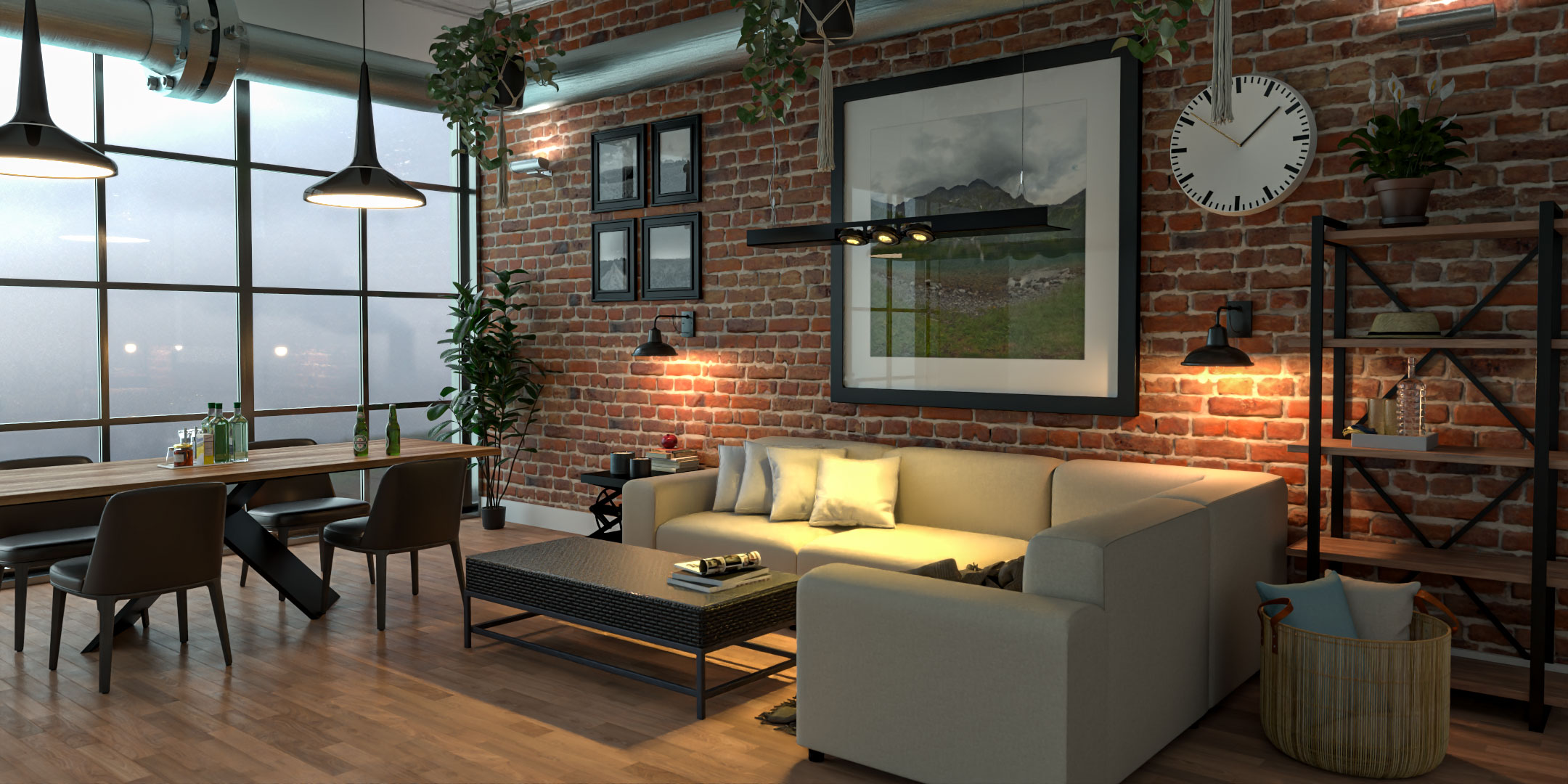
Property developers face a fundamental challenge when marketing new developments: how do you sell a property that does not yet exist?
Before construction is complete, prospective buyers, investors and commercial tenants cannot physically experience the finished building. They may have access to floor plans, architectural drawings and specifications, but these documents do not always communicate the full potential of a proposed development.
Architectural rendering helps bridge that gap.
By transforming architectural drawings and design information into photorealistic computer-generated imagery (CGI), developers can present properties long before they are built. Exterior visualisations, furnished interiors, aerial views and architectural walkthroughs can become valuable assets for marketing, investment presentations and off-plan property sales.
However, effective architectural rendering involves more than producing visually impressive images.
For property developers, the greatest value comes from creating visual content that communicates the development clearly, addresses buyer questions and supports the wider sales strategy.
This guide explores how architectural rendering can transform property designs into practical sales and marketing tools, from the earliest development presentations through to the launch of an off-plan marketing campaign.
What Is Architectural Rendering for Property Developers?
Architectural rendering is the process of creating computer-generated representations of proposed buildings and spaces using 3D modelling, realistic materials, lighting and digital visualisation technology.
For property developers, CGI provides a way to communicate how a development is intended to look before construction is complete.
Depending on the project, architectural rendering may include:
Photorealistic exterior images
Residential interior CGI
Commercial interior visualisation
Aerial development renderings
Streetscape imagery
3D floor plans
Architectural walkthrough animations
360-degree virtual views
Virtual reality experiences
Investor presentation imagery
These visual assets can support different stages of the development process.
An exterior rendering might be used to introduce a proposed housing scheme to investors.
A furnished apartment image could appear in an off-plan sales brochure.
An aerial CGI may communicate the arrangement of a large development, while a walkthrough animation can help prospective buyers understand how spaces connect.
Our complete guide to architectural visualisation in the UK explores the wider role of CGI across architecture and property development.
Why Property Developers Need More Than Architectural Drawings
Architectural drawings are essential for designing, coordinating and constructing buildings.
They communicate dimensions, layouts, elevations and technical information with precision.
However, their effectiveness as sales tools can be limited.
A prospective buyer may understand that an apartment has two bedrooms and an open-plan living area, but still struggle to imagine how the finished property will look.
Similarly, an investor reviewing a proposed development may understand the site layout without immediately appreciating its architectural character or intended market positioning.
Photorealistic CGI translates technical information into a more accessible visual format.
It can communicate:
The appearance of the completed development
Building proportions and architectural features
Exterior materials and finishes
Interior layouts and furnishings
Landscaping and outdoor spaces
Natural and artificial lighting
Relationships between buildings
The overall character of the development
This makes architectural visualisation particularly valuable when the intended audience is not accustomed to interpreting technical drawings.
1. Turning Architectural Designs Into Marketable Property Imagery
The first step in transforming architectural designs into sales tools is identifying which aspects of the development need to be communicated.
A developer marketing a single luxury residence may require a very different set of images from a developer launching a large housing scheme.
For example, a luxury property campaign might focus on:
A striking exterior perspective
The entrance and driveway
Open-plan living spaces
A premium kitchen
Principal bedrooms
Outdoor entertaining areas
A larger residential development may require:
Aerial site imagery
Streetscape views
Different house types
Apartment interiors
Communal areas
Landscaping
Development-wide marketing visuals
The objective is to create imagery that helps the intended audience understand the property.
Rather than selecting camera views solely because they look attractive, developers should consider what each image needs to communicate.
A well-planned CGI package can become the visual foundation of a property marketing campaign.
Our article on CGI for property developers and accelerating off-plan sales explores this approach in greater detail.
2. Exterior Architectural Rendering: Creating the First Impression
Exterior CGI is often the first visual introduction a buyer receives to an unbuilt development.
It may appear on a property website, brochure cover, advertising campaign or development hoarding.
A successful exterior rendering should communicate the architecture clearly while presenting the development in an appropriate setting.
Important elements include:
Building design and proportions
Facade materials
Windows and glazing
Entrances
Balconies and terraces
Landscaping
Roads and pedestrian areas
Surrounding buildings
Natural lighting
For example, a street-level CGI of a residential development can show how the proposed homes relate to the road, gardens and neighbouring properties.
An evening rendering may communicate a different atmosphere, particularly for premium developments.
However, exterior imagery should remain credible.
Exaggerated landscaping, misleading viewpoints or inaccurate materials can create expectations that the completed development may not meet.
The strongest architectural CGI combines visual appeal with responsible representation of the design.
3. Interior Rendering: Helping Buyers Imagine Their Future Property
Interior CGI plays an important role in off-plan residential marketing.
A floor plan provides information about dimensions and room arrangements, but a furnished rendering can make those spaces easier to understand.
For example, a photorealistic living room image can demonstrate:
Furniture proportions
Window positions
Ceiling heights
Flooring
Wall finishes
Lighting
Kitchen arrangements
Connections to balconies or gardens
This can help prospective buyers evaluate whether the proposed property meets their needs.
For apartment developments, interior CGI may also communicate differences between property types or specification packages.
A standard apartment and a premium penthouse may require distinct visual approaches to reflect their respective designs and target audiences.
Our guide to photorealistic interior visualisation for high-end projects explains how realistic materials, lighting and composition contribute to convincing interior CGI.
4. Aerial Rendering: Communicating the Complete Development
For larger property developments, a single street-level image may not communicate the overall scheme.
Aerial architectural rendering can provide a broader perspective.
This can be particularly useful for:
Housing developments
Apartment complexes
Mixed-use schemes
Commercial developments
Regeneration projects
Developments with extensive landscaping
An aerial CGI may show:
The arrangement of buildings
Roads and access routes
Parking areas
Landscaped spaces
Communal facilities
Pedestrian connections
Relationships with surrounding properties
This can help buyers and investors understand the wider development rather than evaluating individual buildings in isolation.
For developers working on larger schemes, aerial imagery can be particularly valuable in presentations where the overall site arrangement is important.
5. Supporting Off-Plan Property Sales
Off-plan sales depend on communicating a property before buyers can physically inspect it.
Prospective purchasers may need to make decisions based on drawings, specifications, contracts and visual representations.
Architectural CGI can help make the proposed property easier to understand.
For example, a marketing package might include:
Exterior CGI showing the building
Interior CGI showing the proposed finishes
A floor plan identifying the layout
Aerial imagery showing the wider development
A walkthrough animation demonstrating spatial relationships
Together, these assets provide a more comprehensive presentation.
They can help buyers understand what is being proposed and ask more informed questions.
However, CGI should complement accurate specifications and sales documentation rather than replace them.
Our guide to why off-plan property sales depend on high-quality 3D rendering examines how visualisation supports this process.
6. Building Buyer Confidence Through Photorealistic CGI
Purchasing a property involves significant financial decisions.
When the building has not yet been constructed, uncertainty about the finished environment can become an additional consideration.
Photorealistic CGI can help reduce some of that uncertainty.
It allows prospective buyers to examine realistic representations of:
Exterior architecture
Interior finishes
Room proportions
Furniture arrangements
Landscaping
Balconies
Communal spaces
This can support a clearer understanding of the proposed property.
For example, an interior rendering may help a buyer understand how a kitchen and living area connect.
An exterior image may demonstrate the intended appearance of the building and its surrounding environment.
The important factor is accuracy.
A convincing CGI should reflect the available architectural information and distinguish between confirmed specifications and illustrative features.
Visual confidence should be based on clarity rather than exaggeration.
7. Using Architectural CGI to Attract Property Investors
Architectural rendering is not limited to consumer-facing property marketing.
It can also support investor presentations.
Developers seeking investment may need to communicate a proposed scheme to individuals or organisations that are not directly involved in the architectural design process.
A clear visual presentation can help explain:
The overall development concept
Architectural character
Building arrangements
Proposed residential or commercial spaces
Site layout
Landscaping
Intended market positioning
For example, an investor presentation for a mixed-use development might combine aerial CGI, exterior perspectives and interior visualisations.
These images can help communicate the intended project more effectively than drawings alone.
However, architectural CGI does not demonstrate financial viability or guarantee investment.
Investors still require appropriate financial information, development appraisals, risk assessments and supporting documentation.
Our guide to how UK property developers use 3D visualisation to secure investors explores the role of CGI within development presentations.
8. Creating a Consistent Visual Identity for a Development
A property development may be marketed across several channels.
These can include:
Development websites
Property portals
Social media
Brochures
Email campaigns
Digital advertising
Sales suites
Exhibition displays
Investor presentations
Consistency across these channels is important.
If the building materials, landscaping or architectural details appear different in separate images, the presentation may become confusing.
A coordinated 3D model provides a shared foundation for multiple visual outputs.
For example, the same exterior materials can be represented consistently across street-level images, aerial CGI and architectural animations.
This can help establish a coherent visual identity for the development.
The result is a more unified presentation across the wider marketing campaign.
9. Architectural Rendering for Property Websites
A development website often acts as a central source of information for prospective buyers.
Architectural CGI can provide visual content for different sections of the website.
For example:
Homepage: A strong exterior rendering introducing the development.
Property types: Individual house or apartment images.
Interiors: Photorealistic CGI showing kitchens, living areas and bedrooms.
Development overview: Aerial imagery showing the site arrangement.
Lifestyle and amenities: Visualisations of communal spaces, landscaping and shared facilities.
Virtual experiences: Walkthrough animations or 360-degree views.
The imagery should be selected according to the information visitors need.
A visually impressive website is useful, but buyers should also be able to understand the proposed properties clearly.
10. Using CGI in Property Brochures
Printed and digital brochures remain useful for many residential and commercial developments.
Architectural CGI can provide the principal visual content.
A brochure might include:
Cover imagery
Exterior perspectives
Interior renderings
Development overviews
Individual property types
Lifestyle imagery
Floor plans
For premium developments, the quality and consistency of the imagery can contribute to the overall presentation.
However, the purpose should remain informative.
Photorealistic visuals should communicate the architecture and intended specifications accurately.
Developers should also ensure that relevant qualifications are included where images contain illustrative furnishings, landscaping or finishes.
11. Architectural CGI for Social Media Marketing
Social media provides another opportunity to introduce developments to prospective buyers and investors.
Architectural imagery can be adapted for platforms such as Instagram, Facebook, LinkedIn and TikTok.
For example, a developer might publish:
Exterior CGI previews
Interior image collections
Development progress comparisons
Short architectural animations
Apartment walkthrough clips
Material and design highlights
Different formats may be appropriate for different audiences.
A short vertical video may work well for introducing an apartment interior, while a detailed aerial CGI may be more suitable for a professional development announcement.
The advantage of a coordinated 3D environment is that visual content can potentially be adapted for multiple channels.
12. Architectural Walkthroughs as Sales Presentation Tools
Still images communicate selected viewpoints.
Architectural walkthrough animations can communicate movement through a proposed property.
For example, a residential walkthrough might begin outside the building, approach the entrance and continue through the interior.
This can help viewers understand:
Room connections
Circulation
Spatial proportions
Interior layouts
Architectural features
Outdoor relationships
For larger developments, animation may also show streets, landscaping and communal spaces.
This can provide a more continuous understanding of the proposed environment.
Our guide to immersive 3D walkthrough animation for modern marketing explains how animation can support architectural presentations.
13. 360-Degree Rendering for Property Marketing
A conventional architectural render shows one fixed viewpoint.
A 360-degree render allows viewers to explore a proposed environment interactively.
This can be useful for:
Apartments
Show homes
Luxury properties
Commercial interiors
Hotel rooms
Sales presentations
For example, a prospective buyer may be able to look around a proposed living room rather than relying entirely on selected static images.
This can provide a more exploratory visual experience.
Explore Luxe3D's 360-degree rendering services for further information.
14. Virtual Reality for Property Developers
Virtual reality can extend architectural visualisation beyond images and video.
Depending on the technology used, prospective buyers or investors may be able to explore a proposed development through an immersive digital environment.
This can help communicate:
Interior proportions
Room layouts
Architectural features
Material finishes
Spatial connections
The overall development experience
For larger schemes, VR may be particularly useful in sales suites or dedicated presentations.
However, it is not necessary for every project.
The value of immersive technology depends on the development, audience, budget and intended use.
Our guide to virtual reality in UK property development explores these applications.
15. CGI for Residential vs Commercial Property Developers
Residential and commercial developments often require different visual strategies.
Residential Developments
Residential marketing generally focuses on how people may live within the proposed property.
Important imagery may include:
Furnished interiors
Kitchens and bathrooms
Exterior architecture
Gardens and balconies
Communal facilities
Development-wide views
Commercial Developments
Commercial property marketing may place greater emphasis on functionality, layout and intended use.
Important imagery may include:
Office layouts
Retail interiors
Reception areas
Hospitality spaces
Building entrances
External architecture
Site accessibility
For mixed-use developments, both approaches may be required.
Our article on commercial space and mixed-use development CGI explores the role of architectural visualisation in these environments.
16. Using CGI Before Construction Begins
One of the greatest advantages of architectural rendering is that it can be produced before the building exists.
This allows developers to prepare marketing material while construction is still being planned or undertaken.
However, the timing should be considered carefully.
If the design is still changing significantly, commissioning highly detailed marketing imagery too early may lead to extensive revisions.
A more effective approach is to coordinate CGI production with the availability of reliable architectural information.
For example, preliminary imagery may be suitable for early investor discussions.
More detailed photorealistic rendering may be commissioned once the design and specifications are sufficiently developed.
Our guide to pre-construction visualisation and mitigating project risk explores how visualisation can support projects before construction.
17. Architectural Rendering Across the Development Lifecycle
Architectural CGI can support different stages of a development.
Early concept: Simplified imagery communicates the overall design direction.
Design development: More detailed visualisation supports architectural discussions.
Planning and stakeholder communication: Appropriate CGI helps explain the proposed scheme.
Investment presentations: Development imagery communicates the intended project.
Pre-launch marketing: Photorealistic CGI supports website and brochure preparation.
Off-plan sales: Interior and exterior imagery helps prospective buyers understand the properties.
Ongoing marketing: Existing digital assets can potentially be updated or adapted as requirements change.
The appropriate level of detail depends on the stage and intended audience.
Our guide to CGI support across design stages, from concept to handover explores this wider process.
18. Planning the Right CGI Package for a Development
Not every development needs the same number or type of images.
A small residential project may only require a few carefully selected views.
A larger development may need a coordinated package covering different property types, interiors and the wider site.
Before commissioning CGI, developers should consider:
Who is the intended audience?
What stage is the project at?
Which architectural features are most important?
How many property types need to be represented?
Will the imagery be used for planning, marketing or both?
Are animations or immersive experiences required?
Which formats and resolutions are needed?
What is the marketing launch deadline?
Answering these questions can help establish a clearer brief.
The objective should be to commission the visual assets that provide the greatest practical value for the project.
19. How Long Does Architectural Rendering Take for Property Developers?
Production time depends on the scale and complexity of the development.
A single exterior view of a relatively straightforward building may require several working days.
A larger residential or commercial development involving extensive modelling, landscaping and multiple viewpoints may require several weeks.
Important factors include:
Available architectural drawings
Existing 3D models
Building complexity
Number of property types
Landscaping
Interior furnishing
Number of images
Required resolution
Revisions
Animation requirements
The final rendering calculation is only one part of the process.
Modelling, materials, lighting, camera composition and client feedback can represent a substantial proportion of the production schedule.
Our guide to how long architectural renderings take explains the main factors affecting turnaround times.
20. How Much Does Architectural Rendering Cost for Property Developers?
Architectural rendering costs vary according to the scope of the project.
A single-house visualisation is a different production requirement from a large development containing several buildings and property types.
Pricing may depend on:
3D modelling requirements
Architectural complexity
Number of buildings
Landscaping
Interior detail
Number of viewpoints
Resolution
Revisions
Animation
Delivery requirements
Developers should consider the complete visualisation package rather than evaluating each image in isolation.
A coordinated digital model may support several outputs, potentially improving the efficiency of producing additional marketing material.
Our guide to architectural rendering costs in the UK explores these considerations.
You can also review Luxe3D pricing.
21. Measuring the Value of Architectural CGI
Architectural rendering should be evaluated according to how effectively it supports the development's communication and marketing objectives.
Possible indicators include:
Engagement with development marketing
Website enquiries
Brochure requests
Viewing or sales appointments
Buyer questions
Marketing content performance
Investor presentation effectiveness
Reuse of visual assets across campaigns
However, it is important to distinguish correlation from causation.
An increase in enquiries after launching new CGI does not automatically mean that the imagery alone produced the improvement.
Property pricing, location, market conditions, advertising activity and other factors also influence results.
The most defensible value of CGI is its ability to communicate proposed developments more clearly and provide reusable visual content.
22. Common Mistakes Property Developers Should Avoid
Architectural CGI can be a valuable marketing asset, but poor planning can reduce its effectiveness.
Commissioning CGI Without a Clear Purpose
Images should be selected according to the information they need to communicate.
Using Inaccurate Architectural Information
The final CGI should reflect the current proposed design.
Overlooking Interior Visualisation
Exterior images may introduce the development, but buyers often need to understand the internal spaces.
Ignoring the Wider Site
For larger developments, landscaping and surrounding context can be important.
Requesting Major Changes Late in Production
Late architectural revisions can affect modelling, lighting and multiple viewpoints.
Creating Unrealistic Expectations
CGI should distinguish illustrative features from confirmed specifications.
Treating Every Image as a Separate Project
Planning a coordinated visualisation package can support greater consistency and reuse.
23. Choosing an Architectural Rendering Specialist for Property Development
When selecting a CGI provider, property developers should consider more than visual quality.
A suitable specialist should understand architectural information and the intended use of the imagery.
Important considerations include:
Experience interpreting architectural drawings
Photorealistic rendering quality
Residential or commercial project experience
Ability to model complex environments
Material accuracy
Landscaping
Interior visualisation
Animation capabilities
Communication
Revision procedures
Delivery expectations
For developments requiring multiple marketing assets, consistency across different viewpoints is particularly important.
A coordinated approach can help ensure that the architecture, materials and surrounding environment remain visually coherent.
Architectural Rendering for Property Developers With Luxe3D
Luxe3D provides architectural CGI, 3D design and photorealistic visualisation services for property developers, architects, interior designers and businesses across Wales and the wider UK.
With over 20 years of experience in 3D design and visualisation, Luxe3D transforms architectural drawings and development information into detailed visual environments.
Our 3D design and rendering services can support individual residential properties, apartment schemes, commercial spaces and larger developments.
Depending on the project, these environments can also be developed into 3D walkthroughs and floor-plan visualisations, 360-degree renderings and immersive presentations.
The focus is on creating imagery that communicates the proposed development clearly and can be used across practical marketing and presentation applications.
Explore examples of completed work in the Luxe3D portfolio.
Final Thoughts
Architectural rendering allows property developers to transform technical designs into visual content that can support marketing, investment presentations and off-plan sales.
Photorealistic exterior CGI can introduce the development.
Interior visualisation can help buyers understand individual properties.
Aerial imagery can communicate the wider site.
Architectural animation, 360-degree views and virtual reality can provide additional ways to explore proposed environments.
However, the greatest value comes from treating CGI as part of a coordinated development communication strategy rather than simply commissioning individual images.
Each visual asset should have a clear purpose, whether that is explaining the architecture, presenting a property type, communicating the site layout or supporting a marketing campaign.
When developed accurately and used effectively, architectural CGI can become a versatile resource throughout the property development process.
If you are preparing a residential or commercial development and want to explore how architectural rendering could support your presentations, marketing or off-plan sales, contact Luxe3D to discuss your project.