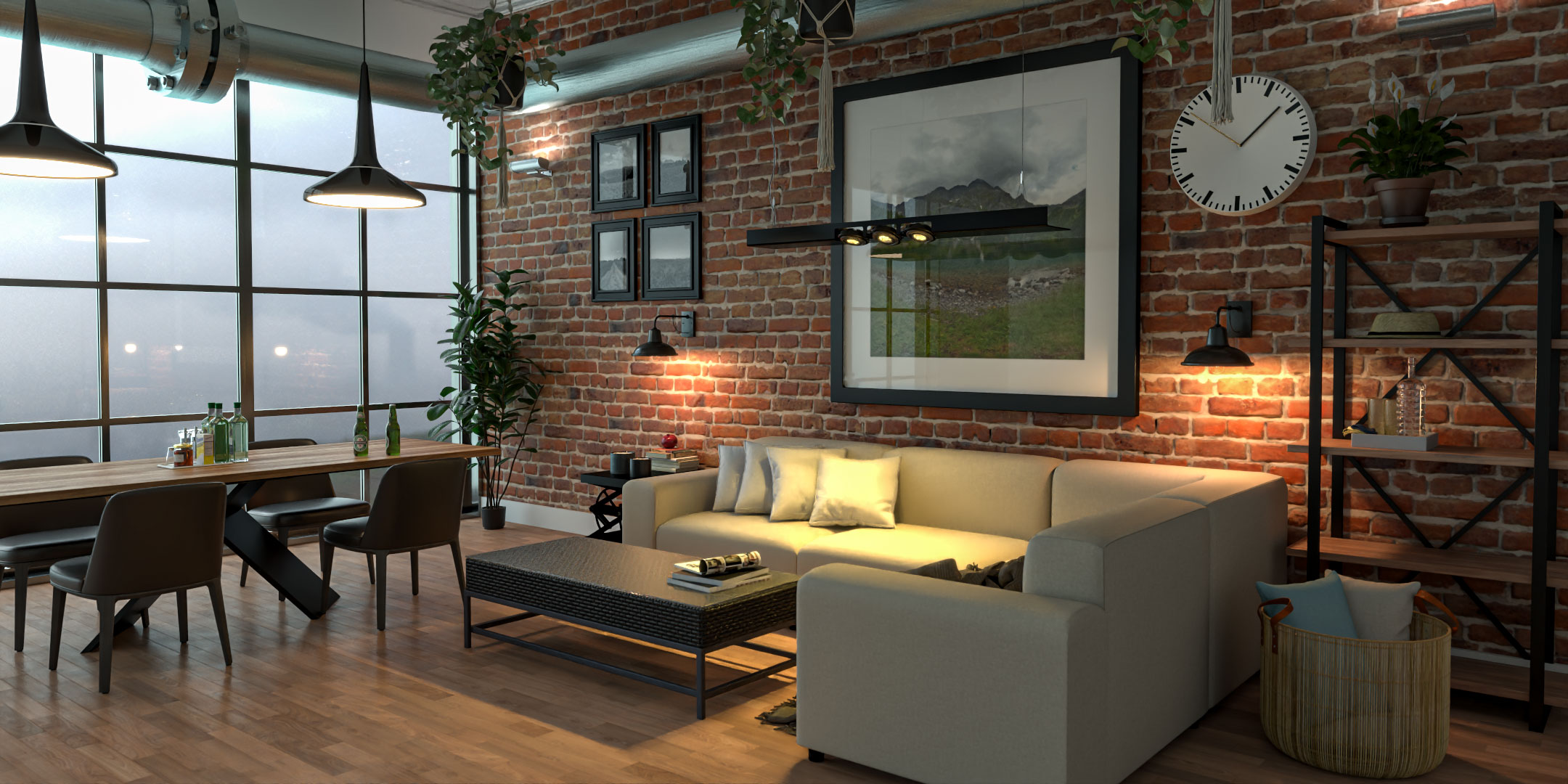
Buying a property is one of the most significant financial decisions a person can make. Yet, when purchasing a home off-plan, buyers are often expected to make that decision before the property physically exists.
Architectural drawings, floor plans and technical specifications provide essential information, but they do not always communicate what the finished property will actually look and feel like.
This is where photorealistic architectural rendering becomes particularly valuable.
By transforming architectural designs into realistic visual representations, CGI helps prospective buyers understand a property before construction is complete. It can communicate spatial relationships, materials, lighting, architectural details and the overall atmosphere of a proposed development.
More importantly, it can reduce uncertainty.
For property developers, architects and marketing teams, this makes photorealistic rendering more than a presentation tool. It becomes an important part of building buyer understanding, supporting informed decisions and creating confidence in a development.
What Is Photorealistic Architectural Rendering?
Photorealistic architectural rendering is the process of creating computer-generated images that closely resemble real-world photography.
Using architectural drawings, 3D models, realistic materials, lighting and carefully composed camera views, a visualisation specialist creates an image showing how a proposed building or interior is expected to appear once completed.
These images can represent:
Residential developments and individual homes
Luxury apartments and penthouses
Commercial properties
Interior living spaces
Kitchens and bathrooms
Landscaped gardens and communal areas
Building exteriors and surrounding environments
Unlike basic conceptual imagery, photorealistic CGI aims to communicate a convincing representation of the proposed finished environment.
Our guide to what 3D architectural rendering is explains the underlying process and its applications.
The distinction is important because buyers are not simply looking at an artistic impression. They are using visual information to help evaluate a potential purchase.
Why Buyer Confidence Matters in Property Development
Property buyers need sufficient information to feel comfortable making a decision.
When purchasing an existing home, they can usually visit the property, walk through its rooms, examine materials and experience the surrounding environment.
With an off-plan property, many of those opportunities are unavailable.
The buyer may be relying on:
Architectural drawings
Floor plans
Written specifications
Development brochures
Sales presentations
Artist impressions
CGI imagery
Show-home representations
Each provides useful information, but there is often a gap between understanding technical details and imagining the finished property.
Photorealistic rendering helps narrow that gap.
It allows prospective buyers to see a realistic interpretation of the development, making the proposed property easier to understand and evaluate.
This is one reason high-quality 3D rendering plays an important role in off-plan property sales.
1. Photorealistic Rendering Reduces Visual Uncertainty
Uncertainty is one of the biggest challenges in off-plan property marketing.
A buyer may understand that an apartment contains two bedrooms, an open-plan kitchen and a balcony.
However, this does not necessarily mean they can picture how those spaces will look when completed.
Questions may remain.
Will the living room feel spacious?
How will the kitchen connect to the dining area?
What will the materials look like together?
How much natural light might enter the room?
How will the development appear from the street?
Photorealistic CGI helps answer these questions visually.
Instead of requiring buyers to interpret several separate drawings, a carefully produced rendering brings architectural information together into a coherent image.
This does not eliminate every uncertainty associated with purchasing an unbuilt property, but it can make the proposed design significantly easier to understand.
2. Buyers Can Understand Space and Proportions More Easily
Floor plans are essential for understanding property layouts.
However, many buyers find it difficult to translate two-dimensional drawings into a realistic impression of three-dimensional space.
A room measuring 4 metres by 5 metres may sound spacious, but the measurements alone do not explain how furniture will fit or how the room will feel.
Photorealistic interior rendering can illustrate:
Furniture positioning
Ceiling heights
Window proportions
Kitchen layouts
Circulation space
Connections between rooms
Material combinations
Natural and artificial lighting
These details provide a more intuitive understanding of the proposed interior.
For example, a rendering of an open-plan kitchen and living area can show how the dining table, kitchen island and seating area relate to one another.
This is particularly valuable when marketing residential developments with several apartment layouts or property types.
Our article on how 3D interior visualisation helps UK designers communicate their ideas and win clients explores the value of communicating spatial design through realistic imagery.
3. Realistic Materials Help Buyers Understand the Finished Property
Materials play an important role in how buyers perceive a property.
A specification might describe engineered timber flooring, stone worktops, brushed metal fittings or textured wall finishes.
But written descriptions do not always communicate how those materials will appear together.
Photorealistic rendering can demonstrate the visual relationship between different finishes.
For example, a kitchen rendering might show:
Natural stone worktops
Timber cabinetry
Metallic fixtures
Ceramic flooring
Integrated lighting
Glass surfaces
Wall finishes
When these elements are represented convincingly, buyers gain a clearer impression of the intended design.
This can be particularly important in premium residential developments, where finishes and interior detailing contribute significantly to the property's positioning.
Our guide to photorealistic interior visualisation for high-end projects explores how materials, lighting and visual detail contribute to convincing CGI.
Accuracy Is Essential
A realistic image is only useful when it reflects the proposed specification.
If a rendering shows materials, fittings or features that are not included in the property, buyers may develop incorrect expectations.
Developers should therefore distinguish between confirmed specifications, optional upgrades and illustrative furnishings.
Buyer confidence should be built on clarity, not visual exaggeration.
4. Lighting Makes Architectural Spaces More Understandable
Lighting is one of the most influential elements in architectural visualisation.
It affects how viewers perceive materials, proportions, depth and atmosphere.
A technically accurate 3D model can still look artificial if the lighting is poorly developed.
Photorealistic rendering uses carefully controlled lighting to communicate how the proposed environment might appear under particular conditions.
For residential properties, this may include:
Daylight entering through windows
Soft shadows across interior surfaces
Reflections on glass and polished materials
Artificial lighting in kitchens and living areas
Exterior illumination during evening scenes
Natural lighting across balconies and terraces
These elements can help buyers understand the intended character of a space.
However, lighting should remain credible.
A development should not be presented with unrealistic sunlight, misleading views or exaggerated brightness that creates a false impression of the finished property.
The most convincing architectural CGI balances visual appeal with believable environmental conditions.
5. Photorealistic CGI Helps Buyers Imagine Living in the Property
Property purchases involve practical considerations, but emotional responses also influence how people evaluate potential homes.
Buyers are not simply purchasing a collection of rooms.
They are considering how those rooms might support their daily lives.
A photorealistic rendering can help them imagine:
Preparing meals in the kitchen
Relaxing in the living room
Entertaining guests
Working from a home office
Enjoying a balcony or terrace
Spending time in landscaped outdoor areas
Furniture, lighting and carefully selected details can help communicate these experiences.
For example, an interior rendering showing a furnished living room with natural daylight and a view towards the garden may make the proposed space easier to relate to than an empty architectural model.
This is where architectural visualisation becomes particularly effective as a communication tool.
It helps buyers connect the physical design with the potential experience of occupying the property.
Our guide to luxury interior rendering in the UK explores how visualisation communicates design intent and atmosphere in premium interiors.
6. Exterior Rendering Builds Confidence in the Overall Development
Buyer confidence is not limited to the interior of a property.
The appearance of the building and its surrounding environment can be equally important.
Prospective buyers may want to understand:
The overall architectural design
Building height and proportions
Exterior materials
Entrances and access routes
Parking arrangements
Balconies and terraces
Landscaping
Communal spaces
Relationships with neighbouring buildings
Photorealistic exterior CGI can bring these elements together.
A street-level image may help buyers understand how the development will appear when approached from the road.
An aerial view can communicate the wider site layout, building arrangement and landscaped areas.
Together, these views provide a more complete picture of the proposed development.
This is especially useful for residential developments where architectural CGI supports design communication and housing marketing.
7. Consistent CGI Creates a More Credible Marketing Presentation
A development may appear across multiple marketing channels.
These can include property websites, brochures, social media, estate agent presentations, advertising campaigns and sales suites.
If the architectural imagery differs significantly between these channels, buyers may struggle to understand which representation reflects the intended finished property.
A consistent CGI strategy can help avoid this.
By developing imagery from the same coordinated architectural model, visualisation specialists can maintain greater consistency in:
Building proportions
Materials
Landscaping
Interior specifications
Architectural details
Lighting approaches
Overall design identity
Different camera views can still be created for different marketing purposes.
However, the underlying development should remain recognisable and accurate.
Our guide to architectural CGI for property developers and off-plan sales explains how coordinated visual content can support development marketing.
8. Architectural Animation Can Strengthen Spatial Understanding
Still images are effective because they allow viewers to study carefully selected architectural compositions.
However, they cannot fully communicate movement through a property.
Architectural animation adds another dimension.
A 3D walkthrough can guide viewers through a proposed building, showing how different spaces connect.
For example, a residential animation might begin outside the development, move through the main entrance and continue into an apartment.
It can then demonstrate the relationship between the kitchen, dining area, living room and outdoor spaces.
This can be particularly useful when the property has an unusual layout or when spatial flow is an important selling point.
Explore how immersive 3D walkthrough animation supports modern property marketing.
Why Movement Matters
A static image communicates a selected viewpoint.
Animation communicates a sequence of viewpoints.
This can help buyers understand transitions, circulation and the overall arrangement of a property.
For developments marketed before construction, that additional spatial information can make the presentation more informative.
9. Virtual Reality Offers a More Immersive Experience
Photorealistic still images and animations are valuable, but some developments may benefit from more interactive forms of presentation.
Virtual reality allows users to experience a digitally recreated environment with a greater sense of spatial presence.
Instead of simply watching a video, buyers can explore the proposed environment through an immersive interface.
Depending on the technology used, this may allow them to:
Look around individual rooms
Experience spatial proportions
Examine interior finishes
Explore different viewpoints
Understand connections between spaces
For larger residential developments and premium properties, this can be particularly useful during sales presentations.
Our article on virtual reality in UK property development explains how immersive technology can support property marketing.
You can also explore the psychology of buying property through virtual reality experiences.
10. Photorealistic Rendering Supports More Informed Buyer Decisions
The ultimate value of photorealistic rendering is not simply that a property looks impressive.
It is that the visual information helps buyers make sense of the proposed development.
A buyer who understands the layout, materials, proportions and overall architectural character is better equipped to evaluate whether the property meets their requirements.
This can support more productive conversations between buyers, estate agents and developers.
Instead of relying entirely on abstract descriptions, the discussion can refer to specific visual elements.
For example:
Is the kitchen layout suitable?
Does the living area provide enough space?
How does the balcony connect to the interior?
Are the proposed finishes appropriate?
Does the building design meet the buyer's expectations?
CGI cannot replace accurate specifications, legal documentation or professional advice.
However, it can complement those resources by making the proposed property easier to understand.
Does Photorealistic Rendering Actually Increase Property Sales?
Photorealistic rendering can support property marketing and sales, but it is important to distinguish between buyer confidence and guaranteed commercial results.
A convincing CGI presentation may help buyers understand a property, engage with the development and ask more informed questions.
However, actual sales performance depends on many factors, including:
Property pricing
Location
Market demand
Mortgage availability
Developer reputation
Construction progress
Property specifications
Marketing effectiveness
Buyer circumstances
It would therefore be misleading to suggest that photorealistic CGI automatically increases sales or guarantees faster transactions.
Its strongest and most defensible value is improving visual communication and reducing uncertainty about the proposed design.
Our guide to driving real estate sales with 3D renderings examines how visualisation can contribute to a broader property marketing strategy.
What Makes a Photorealistic Rendering Convincing?
Not all architectural CGI communicates the same level of realism.
Several elements contribute to a believable result.
Accurate Architectural Modelling
Building proportions, window dimensions, ceiling heights and other architectural features need to reflect the available design information.
Even excellent lighting cannot compensate for fundamentally inaccurate geometry.
Realistic Materials
Textures should respond to light in a believable way.
Wood, stone, glass, metal and fabric have different surface properties, and those differences need to be represented convincingly.
Natural Lighting
Lighting should create credible shadows, reflections and depth.
Overly dramatic illumination can make a scene attractive while reducing its realism.
Appropriate Camera Positioning
Camera angles should communicate the architecture clearly without creating misleading impressions of room sizes or building proportions.
Environmental Context
Exterior CGI benefits from believable landscaping, neighbouring buildings, vegetation and surrounding features.
Careful Post-Production
Colour correction, contrast, atmosphere and other finishing adjustments can refine the image without compromising the architectural information.
These elements work together to create imagery that feels coherent rather than artificially assembled.
For a wider explanation, read our definitive guide to architectural rendering services in the UK.
Why Unrealistic CGI Can Damage Buyer Confidence
Photorealism should not be confused with making a development appear better than the actual proposal.
Exaggerated imagery can create unrealistic expectations.
Potential problems include:
Rooms appearing larger than their actual dimensions
Landscaping shown at a maturity that will not exist at completion
Incorrect exterior materials
Unrealistic views
Furnishings presented without clear illustrative context
Features shown that are not included in the purchase
Lighting conditions that misrepresent the environment
If buyers later discover significant differences between the imagery and the agreed specification, confidence may be undermined.
This is why accurate visualisation is particularly important for off-plan developments.
The purpose should be to communicate the intended finished property convincingly, while making the illustrative nature of CGI clear where appropriate.
When Should Developers Commission Photorealistic CGI?
Architectural rendering is most effective when its production is coordinated with the wider development programme.
Commissioning CGI too early, before important design decisions have been resolved, may result in substantial revisions.
Waiting until the marketing campaign is about to launch can create unnecessary production pressure.
A practical approach is to identify the intended use of the imagery and assess the available design information.
For example:
During design development: CGI can help architects and developers evaluate architectural choices and communicate proposals.
Before marketing launch: Photorealistic imagery can be prepared for brochures, websites, property portals and promotional campaigns.
During off-plan sales: Additional interior views, animations or immersive experiences can help prospective buyers understand individual properties.
As the project develops: Existing imagery may need to be updated to reflect approved design changes.
Our article on CGI support across design stages, from concept to handover explores how visualisation can evolve throughout a project.
Is Photorealistic Rendering Worth the Investment?
For developers marketing unbuilt properties, photorealistic CGI can become a reusable communication asset.
A detailed 3D environment may support several outputs, including:
Exterior marketing images
Interior property visuals
Brochure illustrations
Website imagery
Social media campaigns
Architectural animations
360-degree views
Investor presentations
This can provide value beyond a single image.
However, the investment should reflect the development's scale, target market and marketing requirements.
A small residential project may only need a limited number of carefully selected views.
A larger development with several property types and an extensive marketing campaign may require a more comprehensive visualisation package.
For a better understanding of the factors involved, see our guide to architectural rendering costs in the UK.
Why Work With Luxe3D?
Luxe3D provides architectural CGI, photorealistic rendering and immersive visualisation services for architects, property developers, interior designers and businesses across Wales and the wider UK.
With over 20 years of experience in 3D design and visualisation, Luxe3D focuses on creating detailed visual environments that communicate architectural ideas clearly and convincingly.
Our 3D design and rendering services support residential and commercial projects, from individual interiors to larger architectural developments.
Depending on project requirements, these environments can also support 3D walkthroughs and floor plans, 360-degree renderings and immersive presentations.
The objective is not simply to produce attractive images.
It is to help clients communicate their projects, present design intent and give their audiences a clearer understanding of the proposed environment.
Explore the Luxe3D portfolio to see examples of our visualisation work.
Final Thoughts
Photorealistic architectural rendering can play an important role in building buyer confidence, particularly when marketing residential developments before construction is complete.
By communicating layouts, materials, lighting, proportions and architectural character, CGI helps prospective buyers understand what is being proposed.
It can reduce visual uncertainty, make complex design information more accessible and support more informed purchasing decisions.
However, the effectiveness of photorealistic rendering depends on more than visual quality.
Accuracy, consistency and transparency are equally important.
A convincing image should not simply make a development look desirable. It should help buyers form realistic expectations about the property they are considering.
For developers and architects, this is where professional architectural visualisation delivers meaningful value.
If you are planning a residential development and want to explore how photorealistic CGI could support your marketing and sales presentations, contact Luxe3D to discuss your project.